🛡️Iran Cyber Threats UK 2025 – What Experts Are Warning About
🧩 Quick Overview
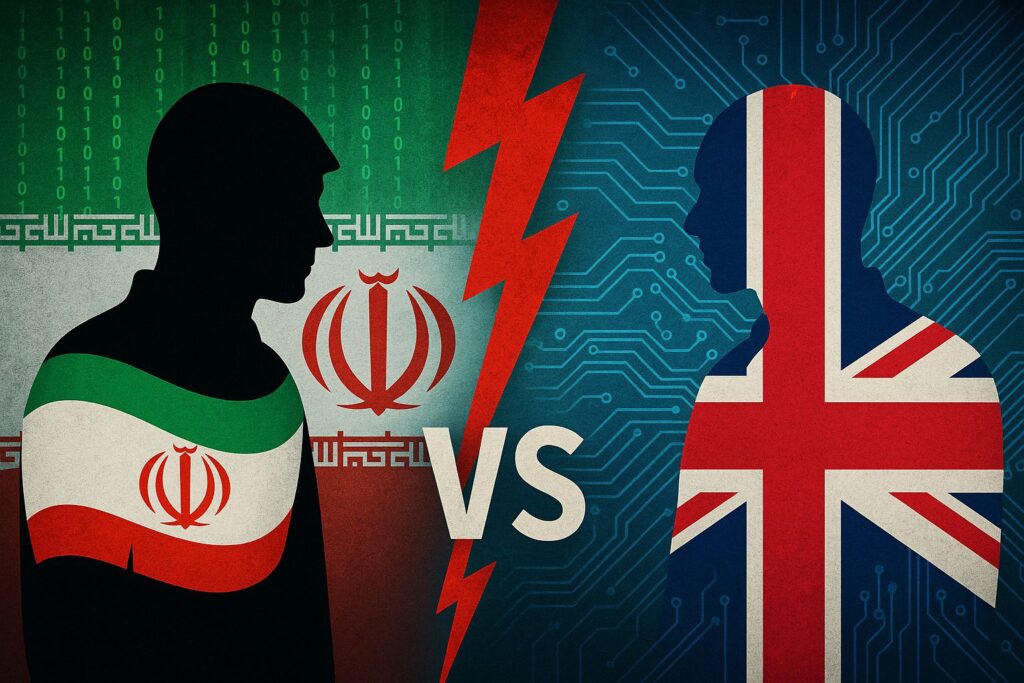
Iran cyber threats UK 2025 have escalated into one of the most serious national security concerns facing Britain today. In a striking development that shook the UK’s cybersecurity community, July 2025 saw the release of a landmark report from the UK’s Intelligence and Security Committee (ISC). The takeaway? Iran is now considered one of the top national threats to Britain — rivaling even Russia — with cyberattacks, espionage, and physical operations like assassination attempts on British soil.
Table of Contents
ToggleThis isn’t just about diplomats or spies operating in the shadows. The ISC’s findings reveal a deeply concerning pattern: Iranian state-backed actors are actively targeting UK-based dissidents, independent journalists, exiled media figures, and even small-scale organizations — anyone seen as a threat to the Iranian regime. These aren’t traditional spy tactics, either. We’re talking about surveillance malware, coordinated phishing campaigns, digital harassment, and real-time cyber intrusions.
Let’s be clear: this isn’t some distant, abstract intelligence war. It’s personal. It affects the everyday internet user, the freelance journalist, the small business owner with a Shopify store, and even the student who thinks using a VPN is enough. The digital battlefield is everywhere now — in your inbox, your apps, your browser history.
The ISC report draws chilling comparisons between Iran’s evolving digital playbook and Russia’s established cyberwarfare legacy, such as the SolarWinds breach and coordinated election interference. Alarmed by these developments, the UK government is now fast-tracking reviews of its cybersecurity laws, foreign influence regulations, and digital defense capabilities.
But here’s what most people miss: this is no longer just the government’s problem. In 2025, cyber threats are smarter, more persistent, and disturbingly personal. It doesn’t matter if you’re a nonprofit, a content creator, or a school IT admin — if you’re connected, you’re a potential target.
In this article, we’ll break down the ISC report in simple terms, explore the implications of Iran cyber threats in the UK, and — most importantly — show you how to protect yourself using affordable, modern cybersecurity tools. Because like it or not, you’re already on the frontline.
📚 What You’ll Learn in This Article
| Section | Key Takeaway |
|---|---|
| 📰 UK Report Breakdown | What the ISC says about Iran’s role in cybercrime and physical threats |
| 🕵️ Who’s Being Targeted | Dissidents, journalists, businesses, and more — who’s most at risk |
| 🧠 Why It’s So Dangerous | Why Iran’s cyber tactics are harder to detect and fight |
| 🕸️ Common Tactics in 2025 | Phishing, malware, DDoS, credential stuffing, DNS hijacking |
| 🧯 Real-Life Impacts | Actual cases of Iranian cyber targeting in the UK |
| 🔐 How to Protect Yourself | A practical guide for users, bloggers, and SMEs in 2025 |
| 🛡️ Antivirus Tools That Help | Why Bitdefender, Kaspersky, and Norton are key tools this year |
| 🔒 Update Everything | Why outdated apps and devices are your weakest links |
| 🔑 Passwords + 2FA | How to lock down your email, bank, and admin logins securely |
| 👁️ Watch for Social Engineering | How attackers trick you — and how to avoid being fooled |
| 🧭 Why the UK Government Is Acting | What laws and crackdowns are now in place |
| 🤖 What Antivirus Alone Can’t Do | Advanced defenses for users and small businesses |
| 🗞️ What This Means Globally | How Iran’s cyber operations are spreading worldwide |
| 🔚 Final Thoughts | Key takeaways and tools for staying safe in 2025 |
📰 What the UK Report Says — A Breakdown for Readers

Iran cyber threats UK 2025 are no longer theoretical — they’re active, ongoing, and far more coordinated than most people realize. On July 10, 2025, the UK’s Intelligence and Security Committee (ISC) released a highly anticipated report — the result of a two-year investigation into the growing threat posed by Iran to the United Kingdom. The findings are not only sobering but also a wake-up call for anyone who’s underestimated Iran’s expanding digital and physical reach.
The report ranks Iran as one of the top-tier espionage threats facing the UK today, just behind global intelligence heavyweights like the United States and Saudi Arabia. That alone is remarkable. Iran, long underestimated in Western cyber policy discussions, is now front and center — and for all the wrong reasons.
But these Iran cyber threats go beyond just hacking or digital mischief. The ISC’s findings detail a multifaceted threat, including:
Covert surveillance on UK soil
Harassment and intimidation of Iranian dissidents and journalists
Assassination plots
Targeted cyberattacks against UK infrastructure and industry
One of the more chilling stats comes from MI5: at least 20 Iranian plots have been intercepted or disrupted since early 2022. That’s nearly one major operation every six weeks — many aimed directly at UK residents, often exiles, political critics, or human rights campaigners.
🎯 Who’s Most at Risk?
Key sectors highlighted as vulnerable include:
Petrochemical industry — a prime target for ransomware and disruption
Financial services — where leaked data or compromised systems could cripple trust
These aren’t far-off hypotheticals. Imagine a coordinated ransomware attack that halts oil refinery operations, or phishing campaigns that penetrate a major fintech firm’s client base. That’s the scale and scope of the Iran cyber threats UK 2025 is grappling with.
Perhaps most unsettling is the nature of Iran’s strategy. It’s not ideological rage or random chaos — it’s “pragmatic, strategic, and opportunistic,” according to the report. Iran is working with clear objectives: to silence critics, destabilize rivals, and gain international leverage — all while staying just below the threshold of open warfare.
The ISC’s warning couldn’t be clearer: Iran is no longer a second-tier digital threat. Its tactics now rival those of Russia — combining physical threats, cyberweapons, and psychological pressure into a playbook that targets both governments and civilians.
In the next sections, we’ll break down how this affects not just national security but businesses, individuals, and everyday users — and what real-world defenses you can use to fight back.
🕵️♂️ Who Is Being Targeted?
Iran cyber threats UK 2025 aren’t just targeting government institutions or global corporations. According to the ISC’s July report, Iran’s state-backed cyber operations are disturbingly personal — and much closer to home than most people realize.
The UK’s intelligence community reveals that Iran isn’t just hacking infrastructure; it’s actively going after individuals. These aren’t theoretical targets. They’re real people living and working in the UK — journalists, activists, researchers, and professionals in critical sectors.
Let’s break down the most targeted groups based on the ISC’s findings:
🎙️ Iranian Dissidents and Journalists
Silencing dissent is a top priority in Iran’s cyber threat strategy. Exiled journalists, political activists, and Persian-language broadcasters like Iran International and BBC Persian have all faced direct digital assaults. This includes phishing campaigns, spyware-infected emails, and coordinated disinformation attacks.
Some journalists have even reported real-world threats and online harassment simply for reporting on Iran’s domestic affairs. These threats show how Iran cyber threats UK 2025 are designed to intimidate and suppress voices abroad.
⚡ UK Energy and Financial Sectors
Iranian cyber actors have probed the UK’s petrochemical utilities and financial institutions, attempting to breach systems that are foundational to economic stability.
Why these sectors? Because they’re high-impact, high-disruption targets. A single ransomware attack could cripple energy production or compromise massive troves of financial data. These scenarios aren’t speculative anymore — they’re part of an active threat model.
🕍 Jewish and Israeli Communities
The report also documents attacks on Jewish and Israeli-affiliated organizations within the UK. Synagogues, Jewish advocacy groups, and even individuals tied to Israel-related causes have been digitally surveilled or targeted by Iranian intelligence efforts.
This extends Iran’s long-standing geopolitical hostility into diaspora communities, showing that location offers no protection from state-backed digital reach.
🧭 Activists, Think Tanks, and NGOs
If your organization deals with Middle East policy, Iranian human rights, or global diplomacy, you’re likely on the radar. NGOs, university researchers, and policy analysts have reported targeted phishing, advanced persistent threats (APTs), and data exfiltration attempts.
Even staff at nonprofit orgs have had their emails, cloud storage, and phones compromised by covert malware — simply for engaging in policy dialogue.
Iran’s digital playbook is methodical and aggressive. It focuses on individuals and institutions seen as threats to Tehran’s narrative or influence. And in 2025, these aren’t just background risks — they’re active campaigns being executed across the UK.
If you or your organization fits any of the above profiles, it’s time to treat Iran cyber threats UK 2025 with the seriousness they demand — and respond accordingly with hardened cybersecurity practices.
🧠 What Makes Iran's Cyber Threats So Dangerous?
Iran cyber threats UK 2025 aren’t just another wave of digital scams or ransomware-for-ransom schemes. At first glance, it might be tempting to lump Iran’s cyber operations in with freelance hackers or criminal gangs looking for fast money — but the truth is far more calculated, state-driven, and deeply political.
Iran’s cyber capabilities aren’t simply disruptive — they are strategic, persistent, and directly sponsored by the state.
So, what exactly sets Iranian cyber operations apart from conventional cybercrime? Here’s what the UK ISC report — backed by real-world incidents — makes crystal clear:
🏛️ 1. These Are Not Lone Hackers — They’re State-Sponsored
Groups like APT34 (OilRig) and Charming Kitten are not your average basement hackers. They are directly linked to Iranian intelligence agencies and often operate under the protection — and sometimes direction — of the Iranian state.
Their missions? Not to steal money, but to advance geopolitical goals: gathering intel on dissidents, punishing critics, retaliating for sanctions, and disrupting sectors like media and finance in adversarial nations. These aren’t shadowy freelancers — they’re government-backed digital agents.
💰 2. They’re Well-Funded and Well-Trained
Iran has heavily invested in its cyber units, especially since facing economic pressure from international sanctions. The result is a highly skilled cyber force armed with:
Custom-built malware and trojans
Zero-day vulnerabilities
Social engineering scripts tailored for targets
Long-term APT campaigns designed to go unnoticed for months or even years
These actors focus on stealth and sophistication, making them far more dangerous than typical smash-and-grab ransomware groups.
⚔️ 3. They Excel at Asymmetric Warfare
What makes Iran cyber threats UK 2025 especially dangerous is their asymmetric nature. With minimal resources, Iran can launch devastating attacks that cause outsized impact — without firing a single bullet.
A few examples of what their tactics can do:
| Cyber Action | Real-World Impact |
|---|---|
| Spear-phishing email to bank admin | Disable payment networks |
| Exploiting industrial control software | Shut down an oil refinery |
| Breaching cloud storage at a think tank | Leak sensitive policy data globally |
This is digital warfare on a shoestring, with maximum effect.
🎯 Bottom Line?
Iranian cyber attackers aren’t just trying to break into your system. They’re studying your habits, identifying weak points, and waiting for the right moment to strike — often with government backing and zero fear of legal consequences.
This is what makes Iran cyber threats UK 2025 unlike anything many organizations or individuals have faced before. It’s not just about tech — it’s about power, silence, and strategy.
🕸️ Common Iranian Cyber Tactics in 2025
Iran cyber threats UK 2025 aren’t just about brute-force hacking — they’re about deception, persistence, and psychological manipulation. Understanding how Iran operates in the cyber realm is the first step toward building a strong defense.
According to the ISC report and top cybersecurity experts, Iranian-backed actors have grown increasingly sophisticated. What makes them especially dangerous is how familiar — even innocent — their attacks appear at first glance. That’s by design.
Here are the most common tactics used by Iranian cyber groups in 2025:
🎣 Phishing & Email Spoofing
Iranian attackers are experts at phishing — sending emails that appear to come from trusted sources like Microsoft, HMRC, the NHS, or even a colleague. These messages often include a malicious link or document that, once clicked, can install malware or steal your credentials.
Unlike spammy phishing of the past, these emails are often customized using real names, internal project details, or scraped LinkedIn info. Their goal? Trick even savvy professionals into lowering their guard.
🦠 Malware Deployment
Once inside a system, attackers deploy tools like:
Remote Access Trojans (RATs)
Keyloggers
Hidden backdoors
These allow them to watch what you do, steal passwords, take screenshots, or even record what you type — often without ever being detected.
Iranian malware is constantly updated to bypass traditional antivirus. In many cases, it’s disguised inside PDF or DOCX files and masquerades as normal system activity.
🌐 DDoS (Distributed Denial of Service)
DDoS attacks remain a go-to tactic for Iranian cyber cells. These attacks flood a website or server with traffic until it crashes — often targeting:
Media platforms
Political websites
Financial services
While they don’t steal data, they’re meant to disrupt, silence, or create panic, particularly around major political events or protests.
🔐 Credential Stuffing
By using leaked credentials from past breaches, Iranian actors automate login attempts across platforms like Gmail, OneDrive, and Slack. This works surprisingly well because many users still reuse passwords.
Without 2FA enabled, attackers can slip into email accounts, cloud drives, or admin panels undetected — a key part of many Iran cyber threats UK 2025 operations.
🛰️ DNS Hijacking & Man-in-the-Middle (MitM)
These advanced techniques involve rerouting legitimate web traffic to fake sites. Users think they’re logging into a real portal, but it’s actually a clone — and attackers harvest credentials in real time.
MitM attacks go one step further by intercepting and manipulating communications between two parties — sometimes injecting malware, altering messages, or collecting sensitive information mid-transmission.
🚨 Final Thought
What makes Iran cyber threats UK 2025 so insidious is that these aren’t random, low-effort tactics. They’re methodical, targeted, and often professionally executed. Whether you’re a journalist, business owner, or remote worker, these methods can be turned against you — without any warning.
In the next section, we’ll walk through practical protection tips: the tools, habits, and digital hygiene steps you can take to defend yourself in today’s high-risk environment.
🧯 Real-Life Impacts of Iranian Cyber Threats
It’s one thing to read about state-sponsored digital attacks in theory — but Iran cyber threats UK 2025 have shown just how personal, invasive, and devastating these attacks can be in real life.
The ISC’s 2025 report goes far beyond vague warnings or abstract data. It lays out concrete examples that expose how deeply Iran-backed cyber actors have infiltrated the UK’s digital — and human — ecosystem.
🎙️ Targeting Dissident Journalists in London
Among the most alarming cases are those involving Persian-language news outlets based in London, such as Iran International and BBC Persian. These organizations broadcast news into Iran, often covering civil protests, corruption scandals, and human rights abuses.
Over the past year, journalists from these outlets have experienced:
Phishing emails pretending to be from HR or tech departments
Spyware embedded in PDF attachments
Unauthorized access to newsroom servers
Physical surveillance near their homes
In some instances, infected devices were caught sending keystrokes and screenshots to Iranian servers. This isn’t just digital intrusion — it’s psychological warfare meant to intimidate and suppress press freedom abroad.
💸 Financial Sector Reconnaissance
Another critical case involves reconnaissance operations against UK banks and fintech startups. MI5 confirmed that Iranian cyber teams had conducted silent scans of:
| Objective | Likely Purpose |
|---|---|
| Internal financial systems | Future ransomware attacks |
| Staff credentials | Spear phishing or infiltration |
| Customer databases | Leverage or blackmail |
This kind of low-and-slow probing suggests long-term planning for economic sabotage, not just one-off theft. It shows how deeply Iran cyber threats UK 2025 are embedded in national security and financial risk landscapes.
🏢 Phishing Campaigns Against SMEs
It’s not just journalists and banks under attack. In 2025, UK small and medium-sized businesses — particularly those run by Iranian ex-pats or trading in the Middle East — became prime targets for Iranian phishing campaigns.
Emails mimicking trusted entities like:
HMRC
PayPal or Stripe
DHL, FedEx, and law firms
…were loaded with malware, fake tax notifications, and fraudulent invoice links. A single click could expose client records, vendor communications, and internal finances — crippling a business’s credibility overnight.
🔍 Final Reflection
These real-world examples paint a chilling picture: Iran cyber threats UK 2025 are not limited to elite intelligence targets. They are designed to silence journalists, disrupt economies, and infiltrate communities — quietly, strategically, and at scale.
Whether you’re a newsroom editor, a fintech developer, or a small business owner, the message is clear: cybersecurity in 2025 is no longer a luxury — it’s a necessity.
🔐 How Can Users Protect Themselves in 2025?

Let’s be honest cybersecurity can feel overwhelming. State-sponsored hackers? Spyware? DNS hijacking? Most people don’t even know where to start.
But here’s the truth: you don’t have to work for the government or be a tech genius to be a target or to defend yourself.
If you’re an activist, journalist, entrepreneur, student, or just someone who lives online you can absolutely be in the crosshairs of a sophisticated attacker. And in 2025, when digital threats have become smarter and more personal, it’s not paranoia it’s preparation.
The good news? With the right tools and habits, you can make yourself a much harder target.
🧱 1. Use a Privacy-First Antivirus
Forget outdated, bloated antivirus programs. In 2025, you need one that offers:
Real-time protection against phishing and spyware
Webcam and microphone shields
Dark web monitoring
Ransomware rollback tools
Top choices like Bitdefender, Kaspersky, or Norton 360 provide multi-layered protection even against nation-state tactics. These tools detect trojans, keyloggers, and even stealthy zero-day exploits before they can hurt you.
🛡️ See our expert-tested list of the best antivirus tools of 2025 →
🔑 2. Enable Multi-Factor Authentication (MFA) Everywhere
If you use just a password — you’re a sitting duck. Iranian attackers love credential stuffing, and if one of your passwords leaks in a breach, they’ll try it across everything.
MFA adds an extra layer: a code from your phone, a fingerprint, or a hardware key. Turn it on for:
Email accounts (especially Gmail, Outlook, and ProtonMail)
Banking and investment apps
Cloud storage (like Google Drive or Dropbox)
Social media platforms
🧠 Pro Tip: Use authenticator apps like Authy or Google Authenticator instead of SMS (which can be hijacked).
🧠 3. Train Your Eye for Phishing
State actors like Iran use high-quality, targeted phishing. Their fake emails aren’t just poorly written scams — they look like they’re from your boss or Google itself.
Here’s how to stay alert:
Always hover over links before clicking
Double-check sender email addresses (not just the name)
Avoid clicking attachments you weren’t expecting
Report suspicious emails to your IT team or service provider
🧪 Want to test your phishing smarts? Try Google’s phishing quiz (external link, nofollow).
💾 4. Encrypt Everything
Tools like ProtonMail, Signal, and NordLocker offer end-to-end encryption, meaning only you and the intended recipient can read your messages or files — not hackers, not governments, not even the app makers.
For sensitive files, use:
Encrypted cloud storage (Proton Drive, Tresorit)
Secure USB drives for offline backups
Full disk encryption on laptops and smartphones
🧠 Activists and journalists: consider using Tails OS or Qubes OS when working on sensitive investigations.
🌐 5. Use a Trusted VPN — But Not Just Any
VPNs are a must for hiding your IP, encrypting your internet traffic, and avoiding regional surveillance. But many free VPNs sell your data or leak your activity.
Go for audited, no-log providers like:
ExpressVPN
NordVPN
Mullvad (no email required)
🧭 Never access sensitive platforms (like email, banking, or CMS dashboards) on public Wi-Fi without a VPN.
👥 6. Educate Your Circle
Your cybersecurity is only as strong as your team’s. If you’re part of an NGO, newsroom, or business, train your staff on best practices. One wrong click from a colleague can open the door for everyone.
Host regular workshops, share updates on phishing trends, and encourage secure file sharing tools across the board.
🔐 Final Word
Cybersecurity in 2025 isn’t just about installing antivirus and hoping for the best. It’s about mindset and discipline. Think of it like locking your front door at night — you do it not because you’re expecting danger, but because you understand the stakes.
Whether you’re being targeted by a hostile nation-state or just caught in the crossfire, taking these steps can make the difference between safety and catastrophe.
🛡️ Use an Advanced Antivirus Suite (Not Just Free Tools)

Let’s get one thing out of the way: free antivirus is no longer enough — not in 2025, and definitely not against threats backed by entire foreign governments.
While basic antivirus tools might catch a stray virus or block a shady download, they simply don’t offer the comprehensive, real-time defense needed to survive in today’s cyber landscape. State-sponsored hackers like those tied to Iran are using tactics far beyond what free tools can handle.
If you value your privacy, data, and online identity, it’s time to level up with a premium antivirus suite.
Here are three of the best security packages in 2025, recommended by independent labs and real-world users alike:
These aren’t just antivirus programs — they’re digital security ecosystems designed to detect, prevent, and respond to even the most sophisticated attacks.
🧠 What Makes These Tools Worth Paying For?
Let’s break it down by feature and benefit:
| Feature | What It Does for You |
|---|---|
| Real-time Protection | Scans apps, websites, and downloads as they happen to block malware on the spot. |
| Anti-Phishing Shields | Identifies and blocks fake login pages, fraudulent emails, and malicious URLs instantly. |
| VPN (Virtual Private Network) | Encrypts your internet traffic so even your ISP — or a snooping nation-state — can’t see what you’re doing. Great for public Wi-Fi. |
| Webcam & Mic Protection | Stops unauthorized apps (or spyware) from turning on your webcam or microphone. |
| Firewall + Network Monitor | Monitors inbound and outbound traffic and alerts you when something suspicious connects to your network. |
🔍 Why This Matters in a Real Attack
Let’s say you accidentally click a well-disguised phishing email sent by a foreign actor posing as HMRC. A free antivirus might scan the attachment after it’s downloaded. But a premium suite with real-time scanning will block the file before it even touches your system.
Or imagine a hidden RAT (Remote Access Trojan) sneaking onto your device. Without webcam/mic control, you’d never know it’s watching you. A full suite alerts you instantly and shuts it down.
🧯 You’re Not Just Paying for Features — You’re Buying Time and Safety
The real value of advanced antivirus tools isn’t just in their feature set — it’s in the peace of mind they offer. In a world where attackers are targeting small businesses, journalists, and everyday users with the same intensity once reserved for governments, having the right digital armor isn’t optional anymore.
Still unsure? Check out our expert comparison of the best antivirus software for 2025 → (internal link) to see which one fits your needs and budget best.
🔒 Keep Your Software & Devices Updated
This might sound basic, but it’s one of the most overlooked defenses against Iran cyber threats UK 2025 — keeping your software updated.
Why does this matter so much? Because Iranian-backed hackers (and other APTs) constantly scan the internet for outdated devices with known security flaws. If your apps or operating system haven’t been patched, it’s like leaving your front door wide open in a storm — eventually, something will find its way in.
🛠️ What You Should Always Keep Updated
| Item | Why It Matters |
|---|---|
| Operating System | Windows, macOS, Linux, iOS, Android — if you don’t install critical patches, attackers can exploit old vulnerabilities |
| Web Browsers | Many malware infections begin in the browser. Use Chrome, Firefox, Edge, or Safari with auto-updates turned on |
| Applications | VPNs, productivity tools, PDF readers — attackers exploit outdated plugins and third-party software |
| IoT Devices | Smart TVs, routers, thermostats, security cams — often missed in updates but easy entry points for Iranian APTs |
⚠️ Avoid These Common Mistakes
| Mistake | What Makes It Risky |
|---|---|
| Cracked or Pirated Software | These versions are often laced with malware and backdoors — and yes, state-sponsored actors like those behind Iran cyber threats UK 2025 exploit them too |
| Suspicious Browser Extensions | Unverified Chrome or Firefox add-ons can track keystrokes, steal data, or inject malicious scripts into pages |
🔁 Set It and Forget It (Securely)
Enable automatic updates wherever possible — your OS, browser, apps, even router firmware. It’s easy to dismiss the “Remind Me Later” notifications, but those updates close real vulnerabilities that are actively being targeted.
🧠 Final Take
Think of updates like digital vaccines — small, regular fixes that immunize your devices against today’s threats. And in 2025, when threats like Iran cyber threats UK 2025 target journalists, entrepreneurs, and everyday users alike, staying outdated isn’t just inconvenient — it’s downright dangerous.
🔑 Use Strong Passwords + 2FA

In 2025, your passwords are still the keys to your digital life — and far too many people are using the same key for every lock. That’s a major risk, especially with Iran cyber threats UK 2025 on the rise.
Iranian-backed hacking groups are actively using one of the most common — and effective — attack methods: credential stuffing. That’s where they try reused or leaked passwords across multiple sites until they find a match. It works alarmingly well.
🧠 First Rule: Never Reuse Passwords
If you use the same password for Gmail, Facebook, and your bank, a breach on any one of those can expose them all. It’s like having one key for your house, car, and office — and then dropping it in a crowded street.
The fix? Unique, complex passwords for every login.
🧰 Use a Password Manager
No one can remember 50+ strong passwords — but password managers can. These apps generate, store, and auto-fill secure passwords across all your devices.
🔒 Top Password Managers for 2025:
| Tool | Highlights |
|---|---|
| 1Password | Cross-platform, easy-to-use, family sharing |
| Bitwarden | Open-source and highly trusted in cybersecurity circles |
| Dashlane | Built-in security reports and dark web monitoring |
| NordPass | User-friendly with strong encryption |
Bonus: Most of these tools will alert you if any saved passwords appear in a data breach — so you can change them fast.
🔐 Second Rule: Always Enable 2FA
Even with a great password, you need a second layer of protection — two-factor authentication (2FA). That way, even if your password is compromised, attackers can’t get in without verifying it’s really you.
🔧 Enable 2FA On:
📧 Email (Gmail, Outlook, ProtonMail)
💳 Banking & payment platforms (PayPal, Venmo, trading apps)
📱 Social media (Instagram, X/Twitter, Facebook)
🛠️ Website dashboards (WordPress, Shopify, cPanel, etc.)
📲 Recommended 2FA Tools:
| Method | Tools |
|---|---|
| Authenticator Apps | Google Authenticator, Authy, Microsoft Authenticator |
| Hardware Keys | YubiKey, Titan Security Key (great for admins & journalists) |
Avoid using SMS for 2FA — it can be intercepted or SIM-swapped by attackers.
⚠️ Real-World Example
One UK-based nonprofit learned the hard way. According to the ISC and MI5, Iranian hackers used leaked credentials from a 2019 breach to access their internal dashboard — because staff reused passwords and never enabled 2FA.
A single authentication code could have prevented the attack.
🧠 Final Take
Think of your passwords like toothbrushes: don’t share them, don’t reuse them, and replace them regularly. And always protect them with 2FA.
Because Iran cyber threats UK 2025 aren’t targeting just governments anymore — they’re going after individuals, nonprofits, and small businesses. And the first line of defense is you.
👁️ Watch for Social Engineering

Not all cyberattacks begin with malware. Some start with a simple “Hello.”
Social engineering is one of the most dangerous and underestimated tactics used in Iran cyber threats UK 2025. Instead of hacking your system, attackers manipulate you — exploiting your trust, curiosity, or sense of urgency.
And in 2025, these psychological tricks are more polished and harder to spot than ever.
🧠 Who Should Be Extra Cautious?
If you’re in any of these roles, you’re a prime target:
| Role | Why You’re at Risk |
|---|---|
| 🎙️ Media professionals and journalists | Often speak critically of authoritarian regimes like Iran’s |
| 🎯 Political activists or campaigners | May be targeted to suppress dissent or steal contact lists |
| 💼 NGO and policy researchers | Deal with sensitive regional data and international diplomacy |
| 🏛️ Government staff or aides | High access to internal systems, comms, and planning |
| 🌐 Tech company employees | Especially system admins with backend access |
These people often influence public narratives, hold access credentials, or speak out publicly — making them valuable prey for state-sponsored attackers.
📥 Common Social Engineering Traps
| Trap Type | What It Looks Like |
|---|---|
| Phishing emails | Urgent requests from “colleagues” or “bosses” |
| Doppelganger domains | Example: gov.uk vs. gov-uk.com |
| Fake WhatsApp leads | “Editors” offering story tips or opportunities |
| Voice phishing (vishing) | Fake calls from “IT” or “police” to install apps |
| Malicious calendar invites | Looks like a meeting but includes malware links |
These tactics are especially relevant in the context of Iran cyber threats UK 2025, where attackers have used them to infiltrate political campaigns, nonprofit dashboards, and even newsroom systems.
✅ How to Defend Yourself
1. Verify Everything
Pause before you click. Check for red flags:
Is the sender’s email legit?
Does the tone match their usual writing?
Can you verify through a separate channel (phone, Slack, etc.)?
Even something as simple as replying, “Did you mean to send this?” could block a major breach.
2. Use Anti-Fraud Tools
Modern antivirus suites now include real-time protection against social engineering:
| Tool | What It Does |
|---|---|
| 🛡️ Bitdefender Anti-Fraud Module | Detects phishing, fake login pages, and deceptive web content |
| 🔍 Norton Safe Web | Flags suspicious links in emails, messages, and browsers |
These tools quietly monitor your clicks and warn you before it’s too late.
🔐 Final Take
If you wouldn’t open your door to a stranger without looking through the peephole — don’t click a link just because it looks official.
In the age of Iran cyber threats UK 2025, social engineering isn’t just a trick — it’s the frontline weapon. Stay sharp, stay skeptical, and always verify before you trust.
🧭 Why the UK Government Is Taking This Seriously
For years, Iran’s digital aggression toward the UK was treated like background noise — acknowledged but not given top priority. That changed dramatically in 2025.
In March 2025, UK Security Minister Dan Jarvis took a bold step: Iran’s intelligence services and the Islamic Revolutionary Guard Corps (IRGC) were officially placed under the Enhanced Tier of the Foreign Influence Registration Scheme (FIRS).
This isn’t just red tape or political posturing — it marks a major shift in how the UK is responding to Iran cyber threats UK 2025.
🧾 What Is the “Enhanced Tier” — and Why It Matters
The Enhanced Tier of FIRS imposes strict obligations on anyone acting on behalf of hostile foreign states. Here’s what it means for Iran-linked activity in the UK:
| Rule | Implication |
|---|---|
| 🇮🇷 Foreign Agent Disclosure | Anyone representing Iran in lobbying, media, or cultural activities must register with the UK government. |
| 🚔 Non-compliance Penalty | Failure to register can result in up to 5 years in prison. |
| 🧷 Espionage Redefined | Iran’s actions are now officially classified alongside Russia and China’s hostile state activity. |
In short: if you’re advancing Tehran’s agenda in the UK — even indirectly — you’re now a legal target.
🚨 Iran’s Cyber Campaigns = Terror-Linked Threats
One of the most groundbreaking shifts in 2025 is the UK’s formal recognition of cyberattacks as part of terrorism-linked activity. This reinforces what cybersecurity experts have said for years:
Cyberwarfare isn’t just data theft. It’s a tool of state-backed terror.
When Iranian operatives hack journalists, shut down infrastructure, or launch phishing campaigns to influence UK discourse — those actions now fall under terror-related frameworks.
This means we could soon see:
Asset freezes on Iran-linked organizations
International arrest warrants
Extraditions for cyber operatives
Increased digital surveillance powers
🛠️ What’s Next: Legal Reforms in the Pipeline
In addition to the Foreign Influence Registration Scheme, Parliament is reviewing:
| Reform Area | Proposed Action |
|---|---|
| 🏛️ Terror Proscription Laws | Could include state-sponsored actors like the IRGC as terror organizations |
| 💰 Fundraising Penalties | Any group raising money for IRGC-affiliated causes could face legal consequences |
| ⚖️ Prosecution of Proxy Groups | Iranian-linked cyber mercenaries may be prosecuted under terrorism law |
These changes aim to close legal loopholes that have allowed Iran cyber threats in the UK to go unchallenged for years.
🧠 Why This Should Matter to You
This isn’t just an issue for MI5, GCHQ, or Parliament. The UK government’s response to Iran cyber threats UK 2025 is about safeguarding real people — from journalists and researchers to startup owners and students.
Iran’s aggression is no longer theoretical — it affects who you trust online, whether your data is safe, and how freely you can speak.
The message from Westminster is now clear:
Cyber aggression is aggression — and the UK will respond with legal, diplomatic, and digital force.
🔐 What Antivirus Can and Can’t Do in the Face of Iran Cyber Threats UK 2025

Let’s make one thing absolutely clear — antivirus software is still essential in 2025. If you’re online and not using a trusted, full-suite security tool, it’s like walking through a war zone without armor. With growing digital aggression like Iran cyber threats UK 2025, you’re not just avoiding spam anymore — you’re defending against state-sponsored actors with military-grade cyber capabilities.
But here’s the truth antivirus companies don’t always highlight: even the best antivirus can’t do it all.
🧱 Why Antivirus Alone Isn’t Enough in 2025
Modern attacks from state actors like Iran don’t rely on simple viruses. They exploit human error, behavioral blind spots, and gaps in layered defense systems. Your antivirus might stop a known trojan, but can it detect a zero-day exploit hiding in a Word doc? Or flag suspicious login patterns across your cloud services?
Iran cyber threats UK 2025 involve reconnaissance, credential theft, and malware designed to remain undetected for weeks — even months.
This is where layered protection comes in.
🛡️ What Goes Beyond Antivirus? (Side-by-Side Table)
| Tool | What It Does |
|---|---|
| 🖥️ EDR (Endpoint Detection & Response) | Monitors device behavior 24/7, flags suspicious activity, and traces the path of intrusions. Think of it as a digital CCTV for your system. |
| 📊 SIEM (Security Info & Event Management) | Combines logs from apps, firewalls, and servers to detect patterns that suggest coordinated attacks or insider threats. |
| 🌐 Threat Intelligence Feeds | Pulls in real-time global data on emerging malware, phishing domains, and APT tactics — helping you stay one step ahead. |
| 🎓 Cybersecurity Awareness Training | Empowers your team (or yourself) to recognize social engineering tricks, suspicious messages, and digital red flags before it’s too late. |
These tools are no longer just for big banks or governments — SMEs, content creators, and even freelancers now have access to similar protection.
🧰 The Good News: Antivirus Tools Have Evolved
Reputable tools like Bitdefender Total Security 2025, Kaspersky Premium 2025, and Norton 360 Deluxe 2025 now offer features that go beyond basic malware scanning:
| Antivirus Suite | Modern Features You Get |
|---|---|
| Bitdefender 2025 | Behavior-based detection, anti-fraud alerts, cloud threat intel, mic/webcam lockout |
| Kaspersky Premium 2025 | Network traffic monitoring, secure browser mode for payments, password manager |
| Norton 360 Deluxe 2025 | Real-time phishing detection, parental controls, VPN, identity theft protection |
They don’t fully replace enterprise tools — but they bring enterprise-grade security to individual users.
🚫 What Antivirus Can’t Do (And Never Will)
Let’s bust the myth of the “set it and forget it” security model.
Even the best antivirus can’t:
Recognize a fake invoice sent to your bookkeeper
Prevent you from clicking “allow” on a fake Adobe update
Stop someone from giving out passwords over a fake IT support call
Iran cyber threats UK 2025 often rely on social engineering, not just software vulnerabilities. No program can replace critical thinking or awareness.
🧠 Final Insight: Build a Security Mindset
Think of antivirus software like a lock on your front door — you need it, but smart attackers go beyond the front entrance. They’ll pose as your energy company, clone your login page, or target your kids’ smart toy to access your Wi-Fi.
In 2025, defending against cyber threats — especially those as sophisticated as Iran’s — requires a mindset shift. It’s no longer just about tools. It’s about layers.
Antivirus is your base layer. Your behavior is the shield.
🌍 Iran Cyber Threats UK 2025: A Global Wake-Up Call for Everyone Online

Iran’s cyber strategy in 2025 has moved well beyond ideology. It’s now about power projection, opportunism, and digital influence — and the UK is just one part of a much larger map.
According to the UK Intelligence and Security Committee (ISC), the days of seeing Iran as just a regional agitator are over. Their cyber capabilities have matured, diversified, and globalized. From launching ransomware on oil giants to phishing journalists in London, Iran cyber threats UK 2025 have ripple effects far beyond British borders.
🧭 Global Footprint of Iran’s Cyber Operations
Iranian state-backed hackers have gone global — not just in target, but in tactic. Below is a snapshot of where and how they’re active around the world:
| Country | Type of Threats from Iran |
|---|---|
| 🇬🇧 United Kingdom | Espionage on dissidents, attacks on critical infrastructure, journalist targeting |
| 🇺🇸 United States | Intrusions into government systems, phishing of universities, infrastructure probing |
| 🇮🇳 India | Probing defense contractors, malware aimed at energy firms, credential stuffing |
| 🇮🇱 Israel | Constant cyber skirmishes, DDoS attacks, targeting of media, disinformation efforts |
| 🇸🇦 Saudi Arabia | Oil refinery hacks, destabilization campaigns, regional influence through proxies |
| 🌐 Others (EU, SEA, Africa) | Attacks on diaspora groups, hijacking of media channels, NGO and academic targeting |
These aren’t opportunistic teenagers trying to score Bitcoin. They’re well-funded, well-trained, and politically motivated actors acting under direction from Iranian intelligence and the Islamic Revolutionary Guard Corps (IRGC).
💣 Cyberwarfare: The Asymmetric Battlefield of 2025
Iran’s true strength lies not in tanks or jets — but in its cyber proxies and digital insurgents.
The Iran cyber threats UK 2025 model reflects a new form of asymmetric warfare — one that’s inexpensive, scalable, and incredibly difficult to trace.
Here’s how that looks in practice:
💻 State-sponsored hacking teams operating from Tehran, Syria, and Lebanon
🕵️ Social engineering targeting high-value individuals like researchers, MPs, and journalists
🌐 Information warfare, including fake news campaigns and deepfakes
💸 Economic disruption through ransomware, data leaks, and extortion
All these tools are used to create fear, confusion, and division — while giving Iran geopolitical leverage without triggering conventional war.
🧠 What This Means for YOU — No Matter Where You Are
Cybersecurity is no longer just a concern for corporations or governments. If you’re online — you’re a potential target.
Here’s who’s especially at risk:
| Role | Why You’re Targeted |
|---|---|
| 📰 Journalists / Media Creators | You influence public perception — and might expose authoritarian behavior |
| 🏢 Small Business Owners | Your financial data, invoices, and customer records are low-hanging fruit |
| 💻 Freelancers / Developers / Bloggers | You often lack enterprise-level security — making you easy to exploit |
| 🎓 Students & Researchers | Access to university networks or sensitive geopolitical materials |
| 📊 NGOs & Policy Think Tanks | You shape policy debates — especially on Middle East and nuclear diplomacy |
Whether you’re a student in Mumbai, a freelancer in Tel Aviv, or a startup founder in Manchester, Iran’s cyber aggression has made the battlefield borderless.
🛡️ What Can You Do About It?
Governments are beginning to respond, but individual action matters more than ever. To defend yourself against Iran cyber threats UK 2025, you need a combination of security tools, digital habits, and constant vigilance.
Quick Checklist to Strengthen Your Defenses Today:
✅ Use a full-suite antivirus with anti-phishing, VPN, and behavior detection (Bitdefender, Norton, Kaspersky)
✅ Enable Two-Factor Authentication (especially for email, banking, and admin panels)
✅ Update all devices and software — no exceptions
✅ Never reuse passwords — use a manager like Bitwarden or 1Password
✅ Be suspicious of unexpected emails, WhatsApp messages, or calendar invites
🔚 Final Perspective: Cyber War Is Real — But So Are Your Defenses
The Iran cyber threats UK 2025 crisis isn’t theoretical. It’s real, global, and already in motion.
Iran has become one of the world’s most active players in digital conflict — but the tools to protect yourself are just as advanced. Whether you’re an individual creator, a nonprofit, or a local business — you have options. Firewalls, antivirus, training, VPNs, and smart thinking still work.
The war might be invisible — but your defense doesn’t have to be.
Stay sharp. Stay secure.
🔚 Final Thoughts: Be Aware, Not Afraid
The ISC’s 2025 report on Iran’s growing cyber threat may sound intimidating — and it should. It confirms what cybersecurity experts and digital rights advocates have been warning for years: no one is too small to be targeted.
But here’s the silver lining: you don’t have to live in fear.
Whether you’re:
Running a YouTube channel about Middle Eastern politics
Managing a Shopify store that ships internationally
Working in finance, journalism, tech, or education
Or just a regular internet user with personal data to protect
You are on the radar — but you also have the tools to stay safe.
This isn’t about doom and gloom. It’s about being smart, proactive, and resilient in a world where the lines between personal life and geopolitical conflict are increasingly blurred.
🛠️ Cyber Defense: What You Can Do Right Now
Here’s a quick breakdown of how everyday users and small businesses can strengthen their defenses — starting today:
| Defense Layer | Why It Matters |
|---|---|
| Premium Antivirus Suite | Blocks known malware, phishing, and spyware in real time. Choose Bitdefender, Norton, or Kaspersky. |
| Multi-Factor Authentication (2FA) | Adds a second layer of protection even if passwords are leaked. |
| Password Manager | Generates and stores strong, unique passwords for every account. |
| Regular Software Updates | Fixes known vulnerabilities that hackers love to exploit. |
| Awareness Training (for teams) | Prevents human error — the most common cause of breaches. |
| Use of VPNs and Encrypted Messaging | Keeps your communications private from eavesdroppers and state surveillance. |
| Phishing & Scam Detection Tools | Tools like Norton Safe Web and Bitdefender Anti-Fraud spot scams before you click. |
| Secure Your IoT & Home Network | Change default router passwords and update smart devices regularly. |
⚠️ Remember: Even Nation-State Hackers Need You to Slip Up
State-backed attackers are powerful — but they’re not omnipotent. They rely on:
Human error
Outdated software
Weak or reused passwords
Lack of training
Trust in the wrong message, person, or file
If you close those gaps, you make yourself a much harder target.
🔐 The Power of Modern Security Tools
The beauty of today’s cybersecurity landscape is that you don’t need a 10-person IT team to stay safe.
Top consumer-grade suites in 2025 already include AI-based malware detection, behavioral analysis, ransomware rollback, and anti-tracking modules — all built-in.
| Tool | Best For |
|---|---|
| Bitdefender 2025 | All-around protection with anti-tracker & VPN |
| Kaspersky Premium | Strong privacy controls + system hardening |
| Norton 360 Deluxe | Great for families + identity theft protection |
💡 Final Word: Confidence Through Awareness
This report doesn’t mean we should all panic. It means we should prepare. Knowledge is power — and in cybersecurity, it’s also your shield.
By combining the right tools, habits, and mindset, you can continue to:
Publish freely
Run your business securely
Protect your team and data
Sleep a little better at night
So be alert, stay sharp, and remember: being a target doesn’t mean being a victim.
🔗 Related Articles from AntivirusFacts.com
Looking to strengthen your digital defense even more? Dive deeper into these expert resources from our team:
🔍 Kaspersky Antivirus Review 2025
Is Kaspersky still a top-tier solution for 2025? Find out in our full breakdown.🛡️ Bitdefender Antivirus Review 2025
Real-world protection, speed, and value — we tested Bitdefender against modern threats.🔒 Norton 360 Review 2025
Does Norton still lead the pack when it comes to family protection and identity theft?✅ External Sources